Best Robot Vacuum for Pet Hair: A UK Buying Guide
There is no single robot vacuum that suits every pet owner. The right pick depends on how much your pet sheds, whether anyone in the household has allergies, how much manual bin-emptying you're willing to do, and your budget. This guide explains which specifications actually matter for pet hair and matches them against robot vacuums currently listed in our dataset, from a sub-£200 self-emptying model to a longer-runtime premium option.
Compared by verified specification — see how we compare.
4 vacuums match
- Vacuum Type: Robot
- Best For: Pet Hair
4 vacuums match
- Vacuum Type: Robot
- Best For: Pet Hair
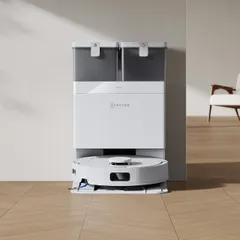
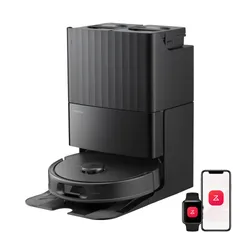
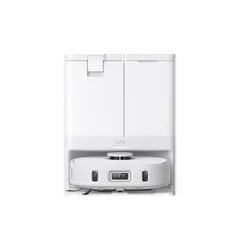
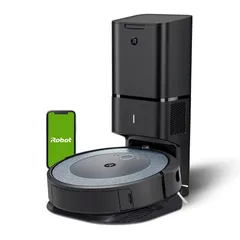
If you share your home with a dog or cat that sheds, the single biggest factor in how well a robot vacuum copes isn't a marketing label like "pet edition" — it's a small set of concrete specs: dustbin or dock capacity, whether it empties itself, filtration, and how it's rated for runtime and noise. This guide walks through those specs and matches them against robot vacuums currently listed in our dataset, so you can see which model fits your situation rather than taking a generic "best for pets" claim at face value.
None of the products below have been tested in our own homes or a lab. The figures come from manufacturer-published specifications and current UK merchant listings, treated as a dataset snapshot rather than a live feed — always check the linked product page for the latest price and stock before buying.
What actually matters when a robot vacuum has to deal with pet hair
A handful of specifications tell you more about pet-hair performance than the phrase "great for pets" ever will:
- Self-emptying dock. Pet hair clogs a small onboard bin faster than everyday dust, so a robot that empties itself into a larger base-station bin needs far less manual attention between full cleans. Most models in this comparison include one; a couple do not.
- Bin or dock capacity. A larger reservoir means longer stretches between you having to empty it yourself, which matters more with heavy-shedding breeds.
- HEPA filtration. For households with pet allergies, a HEPA-rated filter is designed to trap smaller allergen particles rather than recirculating them. Only some listings in our dataset explicitly confirm HEPA filtration — where it isn't confirmed, we've flagged it as unknown rather than assumed absent.
- Mop combo function. Several current pet-hair robot vacuums combine vacuuming with mopping in one dock. This is a convenience feature, not a pet-hair-specific one, but it affects price and dock size.
- Runtime and noise. Longer runtime (measured in minutes on a single charge) matters for larger homes; noise level in decibels matters if the vacuum runs while people or pets are home.
- App control. Scheduling cleans for while you're out is useful if pet hair builds up between visits, though it doesn't change how well the machine picks hair up.
What spec sheets generally don't cover — and what none of the products below have confirmed data for — is how well the roller brush resists long hair wrapping around it. That's a real difference between models in practice, but it isn't something we can state from specifications alone, so treat it as a gap to check on the retailer's product page or in the product's own documentation.
Robot vacuums for pet hair compared
These are the models with the most complete pet-hair-relevant specification data in our current dataset (61 of 73 robot vacuums in the wider catalog are tagged as suitable for pet hair; the table below focuses on the subset with the fullest spec confidence).
| Model | Price (GBP) | Self-emptying | HEPA filter | Mop combo | Bin/dock capacity | Max runtime | Noise |
|---|---|---|---|---|---|---|---|
| Roborock Q7 L5+ | £199.99 | Yes | Not confirmed | Yes | 0.4 L | 150 min | 65 dB |
| ECOVACS DEEBOT T30C | £349.00 | Yes | Not confirmed | Yes | 3 L | 180 min | 64 dB |
| ECOVACS Deebot T50 Pro Omni | £339.00 | Yes | No | Yes | 0.26 L | 255 min | 63 dB |
| eufy X10 Pro Omni | £429.00 | Yes | Not confirmed | Yes | 2.5 L | 180 min | 60 dB |
| Roborock Qrevo S Pro | £549.99 | Yes | Not confirmed | Yes | 2.7 L | 180 min | 64 dB |
| iRobot Roomba Combo i5+ | £589.00 | Yes | Yes | Yes | 0.276 L | 180 min | 67 dB |
| iRobot Roomba j7 | £599.00 | No | Not confirmed | No | 0.4 L | 75 min | 68 dB |
| ECOVACS DEEBOT T90 Pro Omni | £699.00 | Yes | No | Yes | 0.25 L | 350 min | 60 dB |
Capacity figures come as reported per model and may refer to either the robot's onboard bin or the dock's reservoir depending on how each manufacturer publishes its spec sheet — check the linked product page for the exact breakdown before comparing two models on this figure alone. All eight are currently listed as in stock at the time this dataset was compiled; warranty on every model here is 2 years.
Which model matches your situation
Budget, moderate shedding: the Roborock Q7 L5+ is the only self-emptying, mop-combo model under £200 in this set, with 8000Pa suction quoted by the manufacturer and a large rating sample (2,194 ratings, average 3.9). The lower average rating relative to other models here is worth weighing against the price — it suggests a mixed but not overwhelmingly negative ownership experience.
Allergy households: the iRobot Roomba Combo i5+ is the only model in this comparison with an explicitly confirmed HEPA filter, alongside self-emptying and mop-combo functionality. Its onboard bin capacity is small (0.276 L), so the self-emptying dock is doing most of the work between manual cleanouts.
Heavy shedding, larger homes: the ECOVACS DEEBOT T90 Pro Omni has the longest quoted runtime in this set (350 minutes) and the lowest noise rating (60 dB, tied with the eufy X10 Pro Omni), which suits homes needing longer single-charge coverage. It's also the most expensive model listed here at £699.00, and HEPA filtration is not confirmed for this model.
Balance of price and spec coverage: the eufy X10 Pro Omni sits mid-price (£429.00) with the largest rating sample among models that report ratings (470 ratings, average 4.8), self-emptying, mop combo, and the equal-lowest noise rating in the set.
Where a robot may not be the right fit: the iRobot Roomba j7 is the only model here without a self-emptying dock and has the smallest runtime (75 minutes) and highest noise level (68 dB) of the group, which means more frequent manual bin emptying for shedding pets — a real consideration even though it offers Wi-Fi app control like the rest.
What the spec sheet won't tell you
Our dataset currently has full spec confidence for a subset of the 61 robot vacuums tagged for pet hair, and coverage across the wider catalog (73 robot vacuums total) sits at roughly 22% for this feature set — meaning plenty of listed products don't yet have complete pet-hair-relevant data recorded. That's why this comparison covers eight models rather than all 61: these are the ones with high-confidence specifications on the fields that matter most for pet hair.
Several things aren't captured by any spec sheet: how a roller brush actually handles long hair over months of use, how loud a self-emptying dock is during its automatic empty cycle, and how easy the dock is to maintain. None of that is measured here, and none of the products above have been used hands-on for this guide — treat the table as a starting point for narrowing options, not a final verdict.
Robot vacuum vs cordless stick vacuum for pet hair
A robot vacuum suits households that want hands-off, scheduled cleaning between deeper cleans. If you'd rather do a faster, more targeted clean yourself — stairs, upholstery, car interiors — a cordless stick vacuum with anti-hair-wrap features may cover ground a robot can't reach. If you're weighing that option, our cordless pet-hair vacuum comparison covers two current models side by side, and the general pet-hair vacuum hub includes both cordless and upright options alongside robots.
Frequently asked questions
Do I need a self-emptying robot vacuum for pet hair? It isn't strictly necessary, but it reduces how often you have to manually empty a bin that fills with hair faster than with dust alone. Among the models compared here, all but one include a self-emptying dock.
Is a HEPA filter worth prioritising? If anyone in the household has pet allergies, HEPA filtration is designed to capture smaller allergen particles rather than recirculating them. Only one model in this comparison, the iRobot Roomba Combo i5+, has confirmed HEPA filtration in our current data; for the rest, it's unconfirmed rather than absent.
What's a reasonable budget for a pet-hair robot vacuum? In this dataset, self-emptying mop-combo models range from just under £200 to £699.00. Lower-priced models can still self-empty and mop, but tend to have smaller onboard bins or less complete spec confidence for pet-specific features.
My robot vacuum won't charge after a cleaning cycle — is that normal? Docking and charging faults are a separate issue from pet-hair performance and can affect any robot model. See our troubleshooting guide for robot vacuums that won't charge for steps to diagnose it.
Do I need a self-emptying robot vacuum for pet hair?
It isn't strictly necessary, but it reduces how often you have to manually empty a bin that fills with hair faster than with dust alone. Among the models compared in this guide, all but one include a self-emptying dock.
Is a HEPA filter worth prioritising for pet allergies?
If anyone in the household has pet allergies, HEPA filtration is designed to capture smaller allergen particles rather than recirculating them. Only one model in this comparison has confirmed HEPA filtration in our current data; for the others, it's unconfirmed rather than absent, so check the manufacturer's page before assuming it's missing.
What's a reasonable budget for a pet-hair robot vacuum?
In our current dataset, self-emptying mop-combo models suitable for pet hair range from just under £200 to £699.00. Lower-priced models can still self-empty and mop, but tend to have smaller onboard bins or less complete specification confidence for pet-specific features.
Is a robot vacuum enough on its own for a shedding dog, or do I still need another vacuum?
Robot vacuums handle floor maintenance between deeper cleans, but they generally can't reach stairs, upholstery, or tight edges as effectively as a handheld or cordless stick vacuum. Many pet owners use a robot for routine floor upkeep alongside a separate vacuum for spot cleaning.
My robot vacuum won't charge after a cleaning cycle — is that related to pet hair?
Not usually. Charging faults are typically caused by dock contact issues, debris on the charging pins, or software problems rather than the amount of pet hair collected. Our troubleshooting guide covers common causes and fixes.