Best Wet and Dry Vacuum Cleaners: A UK Buying Guide
"Wet and dry vacuum" covers two quite different products: compact cordless floor washers such as the Bissell CrossWave range, built to vacuum and mop hard floors in one pass, and corded shop vacuums such as the Karcher WD series and Numatic Henry Charles/George, built for builders' dust, workshop mess and larger wet spills. There isn't one "best" model overall — the right choice depends on whether you're cleaning a kitchen floor or a building site, how big a tank you need, and whether you want a power-tool socket. This guide compares real UK-priced models from both categories and explains what to check before buying.
Compared by verified specification — see how we compare.
3 vacuums match
- Vacuum Type: Wet & Dry
3 vacuums match
- Vacuum Type: Wet & Dry
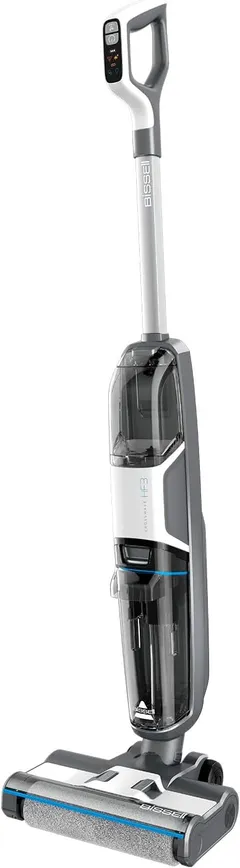
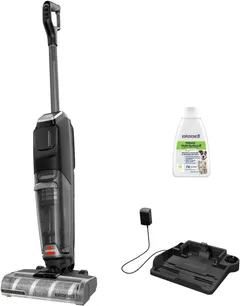
"Wet and dry vacuum cleaner" is a search term that actually covers two quite different tools, and mixing them up is the most common buying mistake in this category.
One group is domestic wet and dry floor washers — lightweight machines like the Bissell CrossWave range that vacuum and mop sealed hard floors (and sometimes area rugs) in a single pass, with small clean/dirty water tanks under a litre. The other is shop vacuums, corded industrial-style machines like the Karcher WD series and Numatic Henry Charles/George, built with large drum tanks (7–30 litres) to suck up sawdust, plaster dust, wet spills, standing water and workshop debris.
There's no single "best" wet and dry vacuum across both groups — a CrossWave won't cope with a skip-load of building rubble, and a Karcher WD shop vac is overkill (and not designed) for daily kitchen floor mopping. The right pick depends on what you're actually cleaning up. Below, both categories are compared using real UK-priced models so you can see current tank sizes, weights and running costs side by side.
What "wet and dry" actually means
A standard vacuum cleaner (upright, canister, cordless stick) is built to pick up dry debris only. Its motor and filters aren't sealed against moisture, so vacuuming up a spilled drink or wet floor can damage the machine and, in the case of mains-powered models, creates a real electrical safety risk.
A genuine wet and dry vacuum uses a different internal design — usually a float valve or shut-off mechanism that stops liquid reaching the motor once the tank is full, plus a filter and tank material rated for both dry dust and standing water. Within that definition, the market splits into:
- Domestic floor washers (Bissell CrossWave and similar): small water tanks, a rotating brush roll, designed to mop and vacuum hard floors together, not intended for picking up large volumes of standing water or heavy dust.
- Shop/industrial vacuums (Karcher WD range, Numatic Henry Charles/George): large bagged or bagless drum tanks, a hose-and-wand system rather than a brush roll, a blower function for clearing debris, and — on some models — a power-tool socket that switches the vacuum on automatically when you start a drill or saw.
A third category worth ruling out early: some robot vacuums (for example models in Ecovacs' Deebot and similar ranges) are also marketed with "wet and dry" style mopping features, since they vacuum and mop floors automatically. These are a genuinely different product — autonomous, app-controlled, and priced and specified very differently — so they aren't included in the comparisons below, which focus on the push-along and shop-vacuum categories that most people mean when they search for a "wet and dry vacuum."
A fourth variant worth flagging separately: some cordless stick vacuums now build a wet-clean function into an otherwise normal stick vacuum, rather than being a dedicated floor washer. The Tefal X-Force Flex 9.60 Aqua is one example — a cordless stick that vacuums dry debris as usual but adds a wet-cleaning mode for hard floors, so it sits between a standard cordless stick and a dedicated CrossWave-style floor washer rather than replacing either.
Best domestic wet and dry vacuums for hard floors and spills
If you want one machine to vacuum crumbs and mop sealed hard floors — kitchens, hallways, bathrooms — in a single pass, this is the category you want. Bissell's CrossWave range dominates the UK market for this style of machine, sold across several tiers that mostly differ in battery voltage, runtime and included accessories rather than core functionality.
| Model | Price | Tank | Weight | Runtime | Power | Notable detail |
|---|---|---|---|---|---|---|
| Bissell CrossWave HF3 Cordless (3639E) | £179.99 | 0.53L clean / 0.41L dirty | 3.99kg | ~25 min | Cordless, 22.2V | Lightest CrossWave in this range; HEPA-rated filter |
| Bissell CrossWave OmniForce (3912E) | from £144.94 | 0.66L combined | 4.8kg | 30 min (18 min turbo) | Cordless, 36V | Cheapest current-generation cordless model found; 4.1★ from 125 reviews |
| Bissell CrossWave Pet Pro (2224E) | £249.99 | 0.82L tank | 5.0kg | N/A (corded) | Corded, 560W | No battery to run down; pet-focused brush roll; 4.7★ from 162 reviews |
| Bissell CrossWave Cordless Max (2765E) | £259.97 | 0.828L clean / 0.55L dirty | 5.22kg | 30 min | Cordless, 36V | Pet-hair strainer in the dirty tank; digital charge/tank indicators |
| Bissell CrossWave HF3 Cordless Select (3639N) | £250.00 | 0.53L clean / 0.41L dirty | 3.99kg | ~25 min | Cordless, 22.2V | Same chassis as the base HF3 with extra accessories; 4.5★ from 330 reviews |
A handful of other CrossWave tiers (Cordless C6, C6 Cordless Pro, HF3 Cordless Pro, OmniFind, OmniFind Select) are sold in the UK at broadly similar prices (roughly £149–£299) but weren't included in the table above to avoid repeating near-identical specs — they follow the same pattern of a small dual-tank system, a self-cleaning brush roll, and 25–30 minutes of cordless runtime.
Practical takeaways for this group:
- Runtime on cordless models is short — typically 18–30 minutes per charge — because the motor is doing three jobs at once (vacuum, wash, dry). That's usually enough for one or two rooms, not a whole house in one go.
- None of the models above are rated as fully sealed HEPA systems for allergen capture in the way a dedicated allergy vacuum is; filtration is generally described as a washable filter, sometimes HEPA-rated at the cartridge level, rather than a whole-machine sealed system.
- These machines are designed for sealed hard floors (laminate, sealed wood, tile, vinyl) and light refresh of area rugs — not for saturating carpets or for standing water. Manufacturer guidance for this whole product family generally warns against use on unsealed wood floors.
- Corded models (like the Pet Pro) trade portability for unlimited run time, which matters if you're cleaning a larger open-plan space.
Shop vacuums and industrial-style wet and dry vacuums for builders' dust and DIY
This is the category most people searching "shop vacuum cleaner uk", "vacuum cleaner for builders dust" or "industrial wet and dry vacuum cleaner" actually need. These are corded machines with large drum tanks, built to swallow sawdust, plaster dust, wood shavings, wet spills and standing water in a garage, workshop or building site.
| Model | Price | Tank | Power | Power-tool socket | Rating |
|---|---|---|---|---|---|
| Karcher WD 2 Plus | £61.00 | 12L | 1000W | No | 4.6★ (2,647 reviews) |
| Karcher WD 3 | £79.99 | 17L | 1000W | No | 4.4★ (16 reviews) |
| Karcher WD 4 | £120.00 | 20L | 1100W | No | 4.4★ (68 reviews) |
| Karcher WD 5 | £149.99 | 25L | 1100W | Yes (auto start/stop) | 5.0★ (2 reviews — very small sample) |
| Karcher WD 6 P | £249.99 | 30L (stainless steel) | 1300W | Yes, 100–1600W range | Not published |
| Karcher WD 1 Battery | £197.99 | 7L | Cordless, 18V | No | Not published |
| Numatic Henry Charles (CVC370-2) | £199.99 | 15L dry / 9L wet | 1000W | No | Not published |
| Numatic Henry George (GVE370-2) | £269.99 | 15L dry / 9L wet / 6L extraction | 1000W | No | 4.7★ (398 reviews) |
How to read this table for builders' dust and DIY use:
- Karcher WD 2 Plus is the cheapest and by far the most-reviewed model here (over 2,600 reviews at 4.6 stars), making it a reasonable low-cost entry point for occasional garage or garden use, though its 12L tank and lack of power-tool socket make it the least suited of the Karcher range to sustained building-site work.
- Karcher WD 5 and WD 6 add an integrated power-tool socket that automatically starts and stops the vacuum when you switch a drill, sander or saw on and off — genuinely useful if you're doing regular DIY or trade work, since you don't have to plug/unplug or switch the vacuum on manually each time. The WD 6's 30-litre stainless steel tank and wider 100–1600W socket range make it the most capable Karcher model in this set for repeated heavier use.
- Karcher WD 1 Battery trades tank size (just 7L) and runtime (around 20 minutes) for cordless freedom, which suits quick jobs away from a socket — inside a car, shed or garden — rather than a full day's site work.
- Numatic Henry Charles and George switch between dry vacuuming and wet pick-up using a float valve rather than a separate wet mode, and George adds a 6L extraction tank and pump for cleaning upholstery and carpets (similar in principle to a carpet-cleaner/extraction machine) alongside its dry and wet vacuum functions. George's 398 reviews at 4.7 stars is the strongest review signal of any model in this comparison.
- None of the models above are branded or certified as M-Class dust extractors (see the safety section below) — an important distinction if you're clearing genuinely hazardous construction dust rather than general household DIY mess.
Wet and dry vacuums vs standard vacuums vs robot mop-vacuums
It's worth being clear about what a wet and dry vacuum isn't, since all three product types get grouped together in search results:
- Standard dry-only vacuums (uprights, canisters, most cordless sticks) should never be used to pick up liquid. Doing so on a corded mains vacuum is also an electrical safety risk, not just a warranty issue.
- Wet and dry vacuums (this guide) are purpose-built for both, using a float valve or similar shut-off and liquid-rated internals.
- Robot vacuum-mop combos vacuum and mop autonomously on a schedule, using a small onboard water tank and a mopping pad or roller rather than wet pick-up of standing liquid or bulk dust. They solve a different problem (hands-off daily floor maintenance) and sit in a different price bracket and product category from both groups above, so they're deliberately excluded from the comparisons in this guide.
What to check before you buy
- Tank size and type. Domestic floor washers use small water tanks under a litre, refilled frequently but light to carry. Shop vacuums use large single drum tanks (7–30L in this comparison) that hold far more dust or liquid before emptying but are heavier and bulkier to store.
- Corded vs cordless. Cordless domestic models give you 18–30 minutes of runtime per charge — fine for a kitchen and hallway, restrictive for a whole house. Shop vacuums in this comparison are almost all corded for unlimited run time, except the Karcher WD 1 Battery, which trades tank size for portability.
- Filter type and washability. Most models here use a washable cartridge or fleece filter rather than a certified HEPA sealed system; check whether filters are user-washable (most are) versus needing periodic replacement.
- Power-tool socket. Only the Karcher WD 5 and WD 6 in this comparison include an auto-start power-tool socket. If you're regularly using a vacuum alongside a sander, router or saw, this feature saves a lot of switching hassle.
- Hose and cable length. Shop vacuums typically ship with a 4–10m cable and a 1.2–2.2m hose; check this matches the size of space you're working in, since a short hose on a large room means constantly repositioning the whole machine.
- Noise. Domestic floor washers in this comparison run 64–80dB; shop vacuums run broadly similar, around 72–78dB. Neither category is especially quiet, so factor this in for flats or shared spaces.
- Weight. Domestic models range roughly 4–5.5kg; shop vacuums range from about 3kg (WD 1 Battery) up to over 11kg (Numatic George with its extraction pump), which matters if you'll be carrying the machine up and down stairs or a ladder.
Safety, dust classes and maintenance
For everyday household spills, pet mess and general DIY dust, the vacuums compared above are suitable. For hazardous construction dust — silica dust from cutting or drilling concrete, brick and mortar, plus cement and some wood dusts — UK Health and Safety Executive (HSE) guidance under COSHH regulations sets a strict workplace exposure limit for respirable crystalline silica and generally expects contractors to use extraction equipment certified to at least M-Class, which must capture at least 99.9% of collected dust and include a low-airflow warning alarm (HSE-aligned guidance summarised by industry sources, dustarrest.com). None of the Karcher WD or Numatic Henry Charles/George models compared above are described in their specifications as M-Class certified — they're general-purpose domestic/DIY wet and dry vacuums, not certified professional dust-extraction units. If you or your business are legally required to control hazardous construction dust on a professional site, check for a specifically M-Class-rated (or higher) extractor rather than relying on a general-purpose shop vacuum.
For ordinary upkeep across both categories: empty and rinse water tanks and dirty-water reservoirs after every wet use rather than leaving them full, let brush rolls and hoses dry fully before storage to avoid mould or odour, and check filters regularly — a clogged filter reduces suction on both floor washers and shop vacuums. Cordless models should be stored with some charge rather than fully depleted for long periods, following the manufacturer's battery care guidance.
As with any cordless or mains-powered appliance, it's worth registering your product with the manufacturer and checking for open safety notices or recalls periodically, particularly for cordless battery-powered models, since battery packs are the most common source of appliance safety recalls across the vacuum cleaner market generally.
Data coverage and limitations
This guide compares a representative sample of wet and dry vacuums drawn from a larger working catalogue, focused on models with clear UK GBP pricing and verifiable specifications at time of research (August 2026); it does not claim to cover every SKU or every regional variant sold under these ranges. A number of additional Bissell CrossWave tiers (Cordless C6, C6 Cordless Pro, HF3 Cordless Pro, OmniFind, OmniFind Select) exist in the UK/EU market at similar price points and specifications to the models tabled above but were left out of the comparison table to avoid repetition.
Prices, stock status and review counts are a snapshot and will change — always check the current price and availability on the retailer's own page before buying. Review counts vary hugely between models (from 2 reviews up to over 2,600), so a high star rating on a very small sample (for example, the Karcher WD 5's 5.0★ from 2 reviews) should be treated with more caution than a rating backed by hundreds of reviews. Some models are priced in EUR from continental European retailers where a directly comparable current UK GBP listing wasn't confirmed during research; these figures are shown as published rather than converted. Product page URLs referenced above follow this site's standard per-product URL pattern and should be confirmed against the live catalogue before publishing.
What's the difference between a wet and dry vacuum and a normal vacuum cleaner?
A normal vacuum cleaner is built for dry debris only — its motor and filters aren't sealed against moisture, so vacuuming liquid can damage it and, on mains-powered models, poses an electrical safety risk. A wet and dry vacuum uses a float valve or similar shut-off mechanism and liquid-rated internals so it can safely pick up spills and standing water as well as dry dust and debris.
Can I use a wet and dry vacuum cleaner for builders' dust?
General-purpose shop vacuums like the Karcher WD range or Numatic Henry Charles/George can handle everyday DIY dust and debris. For hazardous construction dust such as silica from cutting concrete, brick or mortar, HSE guidance under COSHH expects a specifically M-Class certified dust extractor rather than a general-purpose wet and dry vacuum — check the model's certification before relying on it for that kind of work.
What size tank do I need for a shop vacuum?
For occasional garage or garden use, a 12–17 litre tank (like the Karcher WD 2 Plus or WD 3) is usually enough. For regular DIY, workshop use or larger jobs, a 20–30 litre tank (Karcher WD 4, WD 5 or WD 6) means fewer stops to empty it, at the cost of a heavier, bulkier machine.
Are wet and dry vacuums good for carpets?
Domestic wet and dry floor washers such as the Bissell CrossWave range are designed mainly for sealed hard floors, with only light refresh capability on area rugs — they aren't a substitute for a dedicated carpet cleaner. Numatic's Henry George adds a separate wet-extraction function with its own pump, closer to a true carpet/upholstery extraction cleaner, in addition to its dry and wet vacuum modes.
How much does a wet and dry vacuum cost in the UK?
In this comparison, domestic wet and dry floor washers range from about £145 to £300, while shop vacuums and industrial-style wet and dry vacuums range from about £61 to £270, depending on tank size, power and features like a power-tool socket.
Is a cordless wet and dry vacuum as good as a corded one?
Cordless domestic floor washers typically run for only 18–30 minutes per charge, which is fine for a kitchen and hallway but limiting for a larger area in one session. Corded models have no runtime limit but are tied to a socket. Among shop vacuums, almost all models are corded for unlimited use; the Karcher WD 1 Battery is the cordless exception, trading tank size and runtime for portability.