Best Self-Emptying Robot Vacuum: UK Models Compared
There's no single self-emptying robot vacuum that suits everyone. Using specification data for eight self-emptying models on sale in the UK, the closest matches vary by priority: the ECOVACS Deebot N20 Plus and DEEBOT T30C are the only bagless-dock options and the cheapest bagless pick; the Roborock Q7 L5+ and Deebot N20 Plus are the lowest-priced overall; the Xiaomi Robot Vacuum X10 lists the lowest noise figure; and the iRobot Roomba Combo i5+ is the only model with HEPA filtration confirmed in this dataset.
Compared by verified specification — see how we compare.
5 vacuums match
- Vacuum Type: Robot
- Self-Emptying Dock
5 vacuums match
- Vacuum Type: Robot
- Self-Emptying Dock
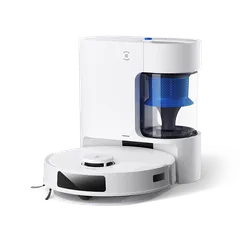
Ecovacs
ECOVACS Deebot N20 Plus Robot Vacuum and Mop with Bagless Self-Empty Station - White
£199.00
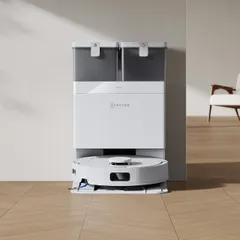
Ecovacs
ECOVACS DEEBOT T30C Robot Vacuum and Mop
£349.00
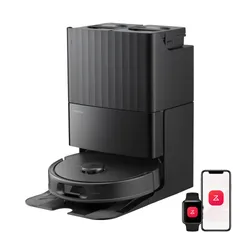
Roborock
Roborock Qrevo S Pro Robot Vacuum and Mop with Multifunctional Dock
£549.99
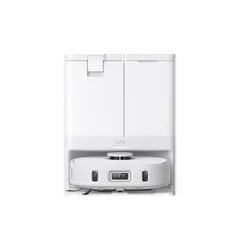
eufy
eufy X10 Pro Omni Robot Vacuum & Mop with All-in-One Station
£429.00
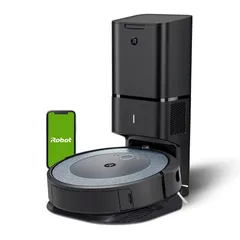
iRobot
iRobot Roomba Combo i5+ Self-Emptying Robot Vacuum and Mop
£589.00
What a self-emptying robot vacuum actually does
A self-emptying robot vacuum empties its onboard dustbin into a larger bin, bag, or canister inside its charging dock after each clean, rather than you tipping out the robot by hand every session. Most docks hold several weeks' worth of dust before you need to empty or replace anything, though how long depends on the dock's own capacity, your floor type, and how much pet hair or debris you're picking up. For a fuller explanation of how the mechanism works and where it can go wrong, see our guide to self-emptying robot vacuums explained.
There's no single best self-emptying robot vacuum for everyone. The right match depends on your budget, whether you want mopping built in, how sensitive you are to noise or allergens, and whether you'd rather avoid buying replacement dust bags. The comparison below uses specification data rather than hands-on testing to help you narrow the field.
How this comparison works
Every figure below comes from a dataset of manufacturer and merchant specifications for models confirmed to have a self-emptying dock, rather than from lab measurements or personal use of the products. Prices, stock status, and ratings are a snapshot taken from the catalogue at the time of writing and should be checked against the live merchant listing before you buy, as they can change. Rating counts vary a lot between models -- some have only a handful of reviews recorded, so treat those figures as indicative rather than statistically reliable.
Self-emptying robot vacuums compared
| Model | Price | Bagless dock | Mop combo | Runtime | Noise | Warranty |
|---|---|---|---|---|---|---|
| ECOVACS DEEBOT T30C | £349.00 | Yes | Yes | 180 min | 64 dB | 2 years |
| iRobot Roomba Combo i5+ | £589.00 | No (bag) | Yes | 180 min | 67 dB | 2 years |
| Roborock Qrevo S Pro | £549.99 | No (bag) | Yes | 180 min | 64 dB | 2 years |
| eufy X10 Pro Omni | £429.00 | No (bag) | Yes | 180 min | 60 dB | 2 years |
| Xiaomi Robot Vacuum X10 | £299.77 | No (bag) | Yes | 180 min | 50 dB | 1 year |
| Roborock Q7 L5+ | £199.99 | No (bag) | Yes | 150 min | 65 dB | 2 years |
| ECOVACS Deebot N20 Plus | £199.00 | Yes | Yes | 300 min | n/a | 2 years |
| ECOVACS Deebot T50 Pro Omni | £339.00 | No (bag) | Yes | 255 min | 63 dB | 2 years |
All eight models in this dataset combine self-emptying with mop functionality, so wet-mopping ability isn't itself a differentiator here -- dock type, noise, and running costs matter more for narrowing between them.
Best matches for common priorities
Based on the specification data above, here's how the models line up against typical buying criteria. These are matches for the stated criteria, not independent testing verdicts.
- Avoiding disposable dust bags: The DEEBOT T30C and Deebot N20 Plus are the only two models here with a bagless self-empty dock, so you empty a bin rather than buying replacement bags. The N20 Plus is also the cheaper of the two at £199.00.
- Lowest listed price with self-emptying and mopping: The Deebot N20 Plus and Roborock Q7 L5+ both sit around £199-£200, the lowest prices in this dataset.
- Lowest noise level on the spec sheet: The Xiaomi Robot Vacuum X10 lists 50 dB, the quietest figure among models with noise data recorded, though its rating sample (1,083 reviews, 4.4 average) is larger but lower-scoring than several rivals.
- Longest listed battery runtime: The Deebot N20 Plus lists up to 300 minutes, ahead of the Deebot T50 Pro Omni at 255 minutes; most other models here list 150-180 minutes.
- HEPA filtration flagged in the dataset: Only the iRobot Roomba Combo i5+ has HEPA filtration recorded as present. Several other listings don't specify a HEPA field either way, so the absence of a flag doesn't necessarily mean a model lacks one -- check the individual product page if filtration matters for allergies.
- Largest rating sample alongside a high average: The eufy X10 Pro Omni combines a 4.8 average across 470 ratings, a larger sample than most models here bar the Q7 L5+ and Xiaomi X10.
- Premium alternative outside this dataset: the Vorwerk Kobold VR7, sold with its own RB7 self-emptying dock, sits well above the price band tabled above -- Vorwerk's direct-sales model and in-home demo support are the main trade-off against the mid-range robots compared here.
What the spec sheet doesn't tell you
Capacity figures in this dataset aren't consistently measured the same way across brands: some appear to describe the dock's own bin or bag size in litres (roughly 2.5-3L for the T30C, Qrevo S Pro, and X10 Pro Omni), while others appear to reflect the robot's onboard dustbin instead (as little as 0.26-0.4L for several other models). Don't compare these numbers directly across models without checking what's actually being measured on the individual product page.
Running costs beyond the purchase price also aren't reflected in the table above -- bag-based docks need replacement bags over time, mop pads wear out, and filters need periodic replacement. If a robot stops docking correctly or won't charge, our guide to troubleshooting a robot vacuum that won't charge covers common causes. Mapping and navigation quality, which affects how reliably a robot finds its way back to the dock to empty, is covered separately in our guide to robot vacuum mapping and navigation.
Before you buy: a quick checklist
- Confirm current price and stock on the merchant listing -- figures here are a dataset snapshot, not a live feed.
- Check whether the dock uses bags or a bagless bin, and factor in the ongoing cost of consumables.
- Look up HEPA filtration directly on the product page if you have allergies or asthma, since it isn't confirmed for every model in this comparison.
- Check the warranty length; most models here carry two years, but the Xiaomi X10 is listed at one year.
- If replacement parts or accessories availability matters to you, see our guide to robot vacuum replacement parts.
For the full, filterable range of robot and other vacuum types, browse our vacuum cleaners category or return to the homepage to start a fresh search.
What does self-emptying mean on a robot vacuum?
It means the robot tips its own dustbin into a larger bin, bag, or canister inside its charging dock after finishing a clean, so you don't have to empty the robot by hand every time. You still need to empty or replace the dock's own container periodically.
Do self-emptying robot vacuums still need dust bags?
Some do and some don't. In this comparison, the ECOVACS DEEBOT T30C and Deebot N20 Plus use a bagless dock (you empty a bin), while the iRobot Roomba Combo i5+, Roborock Qrevo S Pro and Q7 L5+, eufy X10 Pro Omni, Xiaomi X10, and Deebot T50 Pro Omni are recorded as using a bag-based dock, meaning you'll need to buy replacement bags.
Which self-emptying robot vacuum is cheapest in this comparison?
Based on the listed prices in this dataset snapshot, the ECOVACS Deebot N20 Plus (£199.00) and Roborock Q7 L5+ (£199.99) are the lowest-priced options, both combining self-emptying with mop functionality. Prices should be checked against the live merchant listing before buying.
Is a self-emptying robot vacuum worth it if I have allergies?
A self-emptying dock reduces how often you handle a full dustbin, which can help allergy sufferers avoid direct contact with dust. Whether the vacuum itself filters allergens well depends on HEPA filtration, which is only confirmed for the iRobot Roomba Combo i5+ in this dataset -- check individual product pages for the other models before assuming HEPA is included.
What's the difference between self-emptying and auto-empty?
These terms are generally used interchangeably by manufacturers to describe the same feature: a dock that automatically empties the robot's dustbin. Some brands use one term and some the other, but the underlying mechanism is the same.