Best Quiet Vacuum Cleaner: Which Models Are Actually Quiet?
Based on the noise specifications recorded in the product data reviewed for this guide, corded canister vacuums in Rowenta's Silence Force range and self-emptying robot vacuums from Ecovacs and Roborock are the quietest options currently available, with several models measured between roughly 57dB and 65dB. Genuinely quiet cordless stick vacuums are rare: almost none in the reviewed data fall below 70dB. Noise data is missing for a meaningful share of the wider vacuum cleaner market, so this guide should be read as a snapshot of models with verified figures rather than an exhaustive ranking.
Compared by verified specification — see how we compare.
5 vacuums match
- Noise Level: Quiet (<70dB)
5 vacuums match
- Noise Level: Quiet (<70dB)
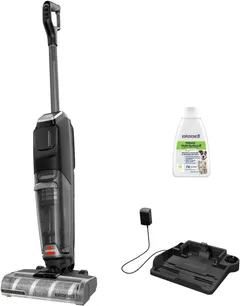
Bissell
BISSELL CrossWave OmniForce Cordless All-in-One Wet & Dry Multi-Surface Floor Cleaner (3912E)
£144.94
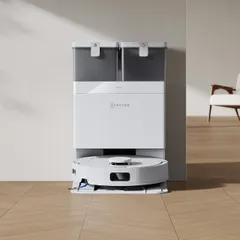
Ecovacs
ECOVACS DEEBOT T30C Robot Vacuum and Mop
£349.00
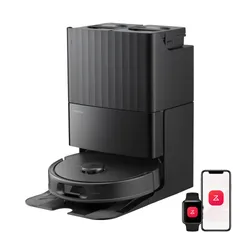
Roborock
Roborock Qrevo S Pro Robot Vacuum and Mop with Multifunctional Dock
£549.99
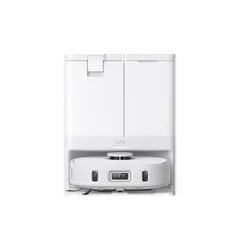
eufy
eufy X10 Pro Omni Robot Vacuum & Mop with All-in-One Station
£429.00
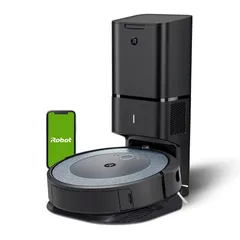
iRobot
iRobot Roomba Combo i5+ Self-Emptying Robot Vacuum and Mop
£589.00
Vacuum cleaner noise levels vary far more than most people expect. Some upright and cordless stick models run at 80dB or louder — comparable to heavy road traffic — while a handful of canister and robot vacuums stay in the 57–65dB range, closer to a normal conversation. If noise is a genuine buying factor for you (small flat, shared walls, young children, pets, home working, or simply personal preference), the type of vacuum you choose matters more than the brand or price tag.
This guide is built from the measured noise specifications recorded for products in a UK vacuum cleaner catalog reviewed for this page, not from marketing copy. It names specific models with their measured decibel (dB) figures and UK prices where available, and it is upfront about where the data runs out.
What counts as a quiet vacuum cleaner
There's no single official cutoff for 'quiet' in vacuum cleaners, but the catalog data behind this guide groups noise levels into three practical bands:
- Quiet: under 70dB. Noticeably calmer than a typical vacuum, similar to a running conversation or background office noise.
- Standard: 70–80dB. The range most upright, canister, and cordless stick vacuums fall into. Comparable to a busy street or a loud household appliance.
- Loud: 80dB and above. Common on high-power cordless sticks and some uprights running at maximum suction. Comparable to heavy traffic or a food blender.
For context, decibels are measured on a logarithmic scale, so a jump from 65dB to 75dB isn't a small increase — it represents roughly double the perceived loudness. A model that measures in the low 60s will sound clearly quieter in a real room than one at 75-80dB, even though the numeric gap looks modest.
No vacuum cleaner on the market is silent. Even the quietest models in this guide still produce audible motor and airflow noise; 'silent vacuum cleaner' as a search term is best understood as shorthand for 'as quiet as realistically available' rather than a literal claim, and this guide treats it that way.
Quiet vacuum cleaners compared
These are the quietest models with a verified decibel figure found in the catalog reviewed for this guide, spanning the categories where low noise is actually achievable.
| Model | Type | Measured noise | UK price | Notes |
|---|---|---|---|---|
| Rowenta Silence Force Effitech RO7473EA | Corded canister (bagged) | 57dB | £264.99 | Quietest verified model in this dataset; sealed HEPA-grade filtration |
| Ecovacs Deebot T90 Pro Omni | Robot (self-emptying) | 60dB | £699 | Dock empties the bin automatically; dock itself is louder than the robot |
| Ecovacs Deebot X12 OmniCyclone | Robot (self-emptying) | 61.1dB | £1,249 | Premium flagship tier |
| Ecovacs Deebot X11 OmniCyclone | Robot (self-emptying) | 61.8dB | £699 | |
| Ecovacs Deebot T50 Pro Omni | Robot (self-emptying) | 63dB | £339 | Best-value quiet robot option with in-stock UK pricing |
| Bissell CrossWave OmniFind Select (4007E) | Wet & dry, corded | 64dB | £299 | Vacuums and mops hard floors in one pass; not a carpet vacuum |
| Roborock Q10 S5 | Robot | 65dB | £179.99 | Budget-friendly entry into quiet robot vacuums |
| Roborock Q10 S5+ | Robot (self-emptying) | 65dB | £249.99 | |
| Gtech Multi | Cordless handheld | 65dB | £169.99 | Closest thing to a genuinely quiet cordless option in this dataset |
| Bissell CrossWave OmniForce (3912E) | Wet & dry, corded | 69dB | £144.94 | Budget quiet pick, just inside the under-70dB band |
All prices are as recorded in the catalog reviewed for this guide and should be confirmed on the retailer's site before purchase, since vacuum cleaner pricing changes frequently.
The quietest models we found: Rowenta Silence Force canister vacuums
Rowenta's 'Silence Force' range is built specifically around low noise, and the catalog data supports that positioning better than most marketing names do. The RO7473EA Silence Force Effitech, a bagged corded canister with sealed HEPA-grade filtration, measured 57dB — the lowest verified figure across every product type reviewed for this guide — and carries a confirmed UK price of £264.99.
Other Silence Force models measured close behind, though several are only confirmed at euro pricing rather than UK retail prices, so treat these as models to look out for rather than confirmed UK deals:
- Silence Force Cyclonic Parquet (RO7936EA) — 59dB, bagless, HEPA filter (price recorded in EUR, not GBP)
- Silence Force Cyclonic Animal (RO7941EA) — 59dB, bagless, HEPA filter (price recorded in EUR, not GBP)
- Silence Force 4A Full Care (RO6486EA) — 63dB in normal mode, dropping to roughly 58dB in a dedicated 'silent' mode (price recorded in EUR, not GBP)
- Silence Force Cyclonic (RO7681EA) — 67dB, a lower-cost bagless entry point (price recorded in EUR, not GBP)
The pattern across this range is consistent: corded canister vacuums with a sealed body and bagged or well-sealed bagless design tend to run quieter than upright or stick vacuums, largely because the motor housing and cyclone chamber act as natural sound dampening. If low noise is your top priority and you don't mind a corded, canister-style vacuum, this is the category with the strongest evidence behind it.
Quiet robot vacuums
Robot vacuums are the second-strongest category for genuine quiet operation. Several current Ecovacs Deebot and Roborock models measured between 60dB and 65dB while cleaning — noticeably quieter than most corded uprights and virtually all cordless stick vacuums.
Two things worth knowing before buying a robot vacuum specifically for its quiet running:
- The self-emptying dock is not quiet. Many of the quiet robot vacuums above use a self-emptying dock that blows dust into a larger bag every few cleaning cycles. That process is significantly louder than the robot's normal cleaning noise — sometimes into the high-70s or low-80s dB range. If you're sensitive to sudden loud noise (for example, a light sleeper or a household with a nervous pet), factor in when the dock empties, not just how loud the robot sounds while roaming.
- Cleaning mode affects noise. Robot vacuums typically get louder on higher suction settings for carpet. The dB figures in this guide reflect the manufacturer's standard/quoted measurement and may not represent every suction mode.
The Roborock Q10 S5 at £179.99 is the lowest-priced quiet robot vacuum with a confirmed UK price and in-stock listing in the catalog reviewed here, making it a reasonable starting point if budget matters as much as noise. The Ecovacs Deebot T50 Pro Omni at £339 sits a step up with self-emptying convenience included.
Why quiet cordless stick vacuums are hard to find
If you searched for a quiet cordless vacuum expecting a clear recommendation, the honest answer from the data reviewed for this guide is that none of the cordless stick vacuums in the catalog were recorded below 70dB. Popular cordless stick ranges — including Dyson's V-series and Gen5detect, AEG's QX and 7000/8000 series, Bosch's Unlimited and Flexxo lines, Electrolux's 800 and Ultimate 800 ranges, and Philips's SpeedPro and PowerPro models — consistently measured in the 74–85dB 'standard' or 'loud' bands.
This isn't a data gap; it's a physical trade-off. Cordless stick vacuums pack a high-speed digital motor into a small, unsealed handheld body with no room for the sound-dampening a canister or upright can use, and they're generally run at higher motor speeds to compensate for smaller batteries and lighter dust cups. A cordless stick vacuum that is both powerful and quiet essentially isn't represented in the current product data.
If a cordless, low-noise clean is what you actually need, the closest realistic options in this dataset are:
- A quiet robot vacuum (see above) for routine floor cleaning without you holding anything.
- The Gtech Multi, a cordless handheld (not a full-size stick vacuum) that measured 65dB — useful for quick spot-cleans rather than whole-home cleaning.
For now, treat 'quiet cordless stick vacuum' as a combination that trades one priority against the other, rather than something a specific model has fully solved.
Low noise hoovers: canister and cylinder vacuums
'Hoover' is still the everyday UK term for a vacuum cleaner regardless of brand, and low-noise cylinder (canister) hoovers are, on the evidence in this catalog, the strongest overall category for quiet cleaning — led by the Rowenta Silence Force range detailed above.
One thing worth flagging: a premium canister brand or a 'Quiet Mark' style certification badge does not automatically mean low decibels. In the catalog reviewed for this guide, one Bosch canister model lists a quiet-focused certification as a feature but was independently measured at 80dB — squarely in the 'loud' band, not the 'quiet' one. Several premium SEBO canister models, despite strong build quality and long warranties, were also measured at 72–76dB rather than in the quiet range. The lesson: check the actual dB figure on the spec sheet rather than relying on a 'quiet' or 'silent' label on the box.
Quiet wet and dry floor cleaners
If your main goal is cleaning hard floors rather than carpet, wet-and-dry vacuum-and-mop combos are worth considering alongside dedicated vacuums. Bissell's CrossWave range recorded two relevant models:
- CrossWave OmniFind Select (4007E) — 64dB, £299, self-cleaning base
- CrossWave OmniForce (3912E) — 69dB, £144.94, the lower-cost option and still just inside the quiet band
These aren't pure vacuum cleaners — they vacuum and wash hard floors in a single pass and aren't designed for deep-cleaning carpet — so they suit a specific use case rather than replacing a main vacuum in a mixed-flooring home.
How to check a vacuum cleaner's real noise level before buying
A few practical steps for anyone shopping specifically on noise, beyond the models listed here:
- Look for a numeric dB figure on the spec sheet, not just a 'quiet' or 'silent' badge. Marketing terms and certifications don't always align with independent measurements, as the Bosch example above shows.
- Check whether the figure is for standard/eco mode or maximum power. Some manufacturers quote the quietest available mode; real-world noise on a higher suction setting will usually be louder.
- For robot vacuums, ask about the dock, not just the robot. Self-emptying and auto-wash docks can be considerably louder than the robot's cleaning noise.
- Treat manufacturer-only figures with a little more caution than independently tested ones. In at least one case in the catalog reviewed for this guide, a manufacturer's claimed noise figure and an independent test result for the same model disagreed by several decibels, and the conflicting figures were left unresolved rather than picked arbitrarily.
- Remember carpet and hard floor performance still matter. The quietest vacuum on paper isn't a good buy if it can't clean the floors you actually have; check suction, bin capacity, and floor-type compatibility alongside noise.
Data coverage and limitations
Noise level (dB) is not a universally published specification. A meaningful share of vacuum cleaners in the wider catalog behind this guide simply have no recorded noise figure at all, so this page reflects the quietest models we could verify, not a complete ranking of every quiet vacuum on the UK market. A model without a listed dB figure here may still be quiet; it just wasn't possible to confirm from the data available.
Where prices are shown in GBP, they were recorded for this guide and should be checked against the current retailer listing, since prices and stock availability change regularly. Some Rowenta Silence Force models with strong noise figures are only confirmed at EUR pricing in the reviewed data; check a UK retailer directly for current GBP pricing and availability before assuming they're sold in the UK on the same terms.
What is the quietest vacuum cleaner in this guide?
Based on the noise specifications reviewed for this guide, the Rowenta Silence Force Effitech RO7473EA, a corded bagged canister vacuum, had the lowest measured figure at 57dB, with a confirmed UK price of £264.99. Several other Rowenta Silence Force and robot vacuum models measured close behind in the 59-65dB range.
What decibel level counts as a quiet vacuum cleaner?
This guide treats readings under 70dB as 'quiet', 70-80dB as 'standard', and 80dB or above as 'loud', based on the banding used in the underlying product data. Most vacuum cleaners fall in the standard or loud range; models in the 57-65dB range stand out as noticeably quieter.
Is there a genuinely silent vacuum cleaner?
No. Every vacuum cleaner produces audible motor and airflow noise. 'Silent vacuum cleaner' is best understood as a search shorthand for 'as quiet as currently available' rather than a literal claim, and no product in the data reviewed for this guide measured as truly silent.
Are robot vacuums quieter than upright or stick vacuums?
Generally yes, based on the models reviewed for this guide. Several robot vacuums measured 60-65dB, compared with 74-85dB for most cordless stick vacuums. The exception is the self-emptying dock some robot vacuums use, which can be considerably louder than the robot itself while it empties.
Can I get a quiet cordless stick vacuum?
Not reliably, based on the data reviewed for this guide. No cordless stick vacuum in the catalog was recorded below 70dB. If cordless and quiet both matter, a quiet robot vacuum or a cordless handheld like the Gtech Multi (65dB) are closer alternatives than a traditional cordless stick vacuum.
What is a low noise hoover?
'Hoover' is a common UK term for any vacuum cleaner. A low noise hoover typically refers to a corded canister (cylinder) vacuum with a sealed, sound-dampened body; Rowenta's Silence Force range is the strongest example found in the data reviewed for this guide, with several models measuring under 70dB.
Does a 'Quiet Mark' or similar certification guarantee low noise?
Not necessarily. In the data reviewed for this guide, at least one canister vacuum listing a quiet-focused certification as a feature was independently measured at 80dB, in the 'loud' band. Check the actual decibel figure on the spec sheet rather than relying on a certification badge alone.