Miele Blizzard CX1 vs Miele Boost CX1: Which Bagless Cylinder Vacuum Should You Choose?
The Miele Blizzard CX1 and Miele Boost CX1 are both bagless cylinder vacuums from Miele's PowerLine range, priced close together at around £299. The Blizzard CX1 has a larger 2.0L dust container and is around 2dB quieter, while the Boost CX1 is roughly 600g lighter. Neither model has a HEPA filter, self-emptying dock, mop function or app control. The Blizzard CX1 suits larger homes or households that want to empty the bin less often; the Boost CX1 suits buyers who prioritise a lighter unit for carrying between floors, provided the marginally higher noise level and smaller bin are acceptable trade-offs.
Data last updated:
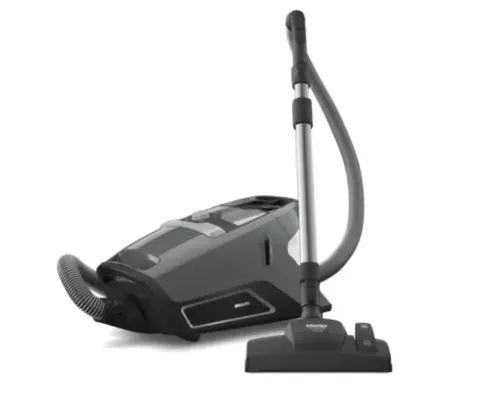
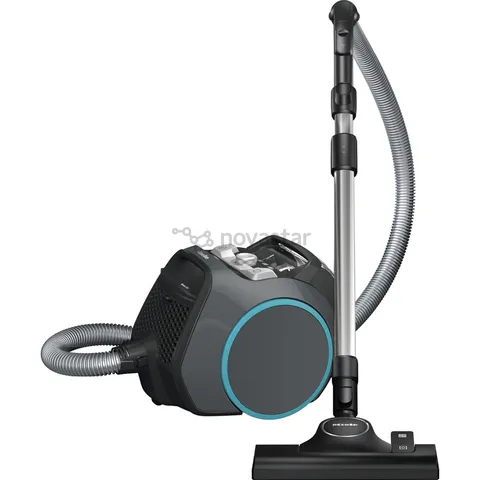
| Spec | Blizzard CX1 PowerLine | Boost CX1 PowerLine |
|---|---|---|
| Type | Bagless Cylinder Vacuum Cleaner | Bagless Canister Vacuum |
| Power source | Corded (Mains) | Corded (Mains) |
| Weight | 8.4kg | 7.8kg |
| Capacity | 2L | 1L |
| Noise level | 76dB | 78dB |
| Warranty | 2 years | 2 years |
| Colour | Graphite Grey | Graphite Grey |
| Bagless | Yes | Yes |
| HEPA filter | No | No |
| Washable filter | No | Yes |
| App-controlled | No | No |
| Self-emptying dock | No | No |
| 2-in-1 mop & vacuum | No | No |
| Wet & dry capable | No | No |
| Surface compatibility | carpet, hard-floor, upholstery, multi-surface | carpet, hard-floor, upholstery, multi-surface |
| Best for | multi-surface, carpet, hardwood-floors, large-homes | carpet, hardwood-floors, multi-surface, small-apartments, stairs |
The Miele Blizzard CX1 and Miele Boost CX1 are both bagless cylinder vacuum cleaners from Miele's PowerLine range, and in the UK they're currently listed at a similar price point around £299. On paper they look like close siblings, but the dust container size, weight and noise level differ enough to matter depending on the size of your home and how much emptying and carrying you're prepared to do. This comparison sets the two side by side using their published specifications, rather than opinions or hands-on impressions, so you can see which one lines up with what you actually need.
Miele Blizzard CX1 vs Miele Boost CX1: specs compared at a glance
| Spec | Miele Blizzard CX1 PowerLine | Miele Boost CX1 PowerLine |
|---|---|---|
| Product type | Bagless cylinder vacuum | Bagless cylinder vacuum |
| Price (UK) | £299.00 | £299.00 |
| Weight | 8.4 kg | 7.8 kg |
| Dust container capacity | 2.0 L | 1.0 L |
| Noise level | 76 dB | 78 dB |
| HEPA filter | No | No |
| Bagless | Yes | Yes |
| Self-emptying | No | No |
| Mop function | No | No |
| App control | No | No |
| Warranty | 2 years | 2 years |
| Average rating | Not available in this dataset | 4.7 out of 5 (79 ratings) |
Treat the price and stock figures above as a dataset snapshot rather than a live price checker. The Boost CX1 price shown here was sourced separately from Miele's UK product listing because it wasn't present in the underlying comparison dataset; confirm current pricing and stock on the linked product or merchant page before buying.
Capacity and emptying: the biggest practical difference
The clearest gap between the two models is dust container size. The Blizzard CX1 holds 2.0 litres, exactly double the Boost CX1's 1.0-litre container. In practical terms, a larger bin means fewer trips to empty it, which tends to matter more in bigger homes, households with pets that shed, or anyone who'd rather vacuum the whole house in one go without stopping to empty a nearly full canister partway through.
The Boost CX1's smaller container is a direct trade-off for its more compact overall size — it's built as a smaller-footprint machine, and a smaller bin is part of that design, not a separate flaw.
Weight and manoeuvrability
The Boost CX1 is the lighter of the two at 7.8 kg, against 8.4 kg for the Blizzard CX1 — a difference of roughly 600 grams. On a single-level home that difference will rarely be noticeable, but for anyone carrying a cylinder vacuum up and down stairs regularly, or storing it in a cupboard on a different floor from where it's mostly used, the lighter unit is easier to lift repeatedly.
Noise level
Miele's published figures put the Blizzard CX1 at 76 dB and the Boost CX1 at 78 dB. That's a 2 dB gap in the Blizzard's favour on paper. The decibel scale isn't linear, so a 2 dB difference is a modest, not dramatic, gap in practice — worth knowing about if you're vacuuming early or late in a household where noise is a concern, but not a decisive factor on its own.
Price and value
Both models are currently priced close to £299 in the UK, so price alone isn't a strong differentiator between them right now. The original comparison dataset for this page only carried a confirmed price for the Blizzard CX1; the Boost CX1 figure above was checked against Miele's UK product listing separately and should be treated as needing a refresh, since merchant pricing changes and neither figure here is a live feed. Both models come with Miele's standard 2-year warranty, so warranty length doesn't tip the decision either way.
What neither model offers
Before choosing between them on the strengths above, it's worth being clear about what both models leave out, according to the specifications used for this comparison:
- No HEPA filter listed for either model
- Neither is self-emptying
- Neither combines vacuuming with mopping
- Neither offers app control
If HEPA-grade filtration is a priority — for example, for allergy management — this pairing may not be the right shortlist, and it's worth checking other cylinder models in Miele's range instead.
Which one fits your home
Based on the specifications above, the Blizzard CX1 is a reasonable match if you want to empty the dust container less often, have a larger home to cover in one session, or want the marginally quieter of the two. The Boost CX1 is a reasonable match if lifting and carrying a lighter unit between rooms or floors matters more to you than bin capacity, and you're comfortable with a smaller container and a couple of extra decibels.
One more data point worth flagging honestly: the dataset used for this comparison includes a customer rating for the Boost CX1 (4.7 out of 5 from 79 ratings) but no equivalent rating figure for the Blizzard CX1. That's a gap in the available data, not evidence that one model is better received than the other — it shouldn't be read as a tiebreaker.
Neither model is presented here as an outright "best" vacuum; the recommendation above is a match against the specific criteria in this dataset, not an independent testing verdict.
Other Miele vacuum comparisons to check
If pet hair is a priority, the Miele Guard M1 Cat & Dog Flex vs Blizzard CX1 Cat & Dog Flex comparison covers Miele's pet-specific variants in more detail. To see how Miele's cylinder range compares with another well-known cylinder-vacuum brand, read Miele vs Sebo. You can also browse the full Miele cylinder vacuum range or the Miele brand hub to see other models at different price points, or head back to the vacuum cleaner comparison homepage to compare across brands.
Is the Miele Boost CX1 just a smaller version of the Blizzard CX1?
Broadly, yes, in terms of positioning within Miele's PowerLine range. Based on the specifications compared here, the Boost CX1 is lighter (7.8 kg vs 8.4 kg) and has exactly half the dust container capacity of the Blizzard CX1 (1.0 L vs 2.0 L), which fits a smaller-footprint, easier-to-carry design rather than a stripped-down or lower-quality machine. Both are bagless cylinder vacuums priced around £299, and both share the same absence of a HEPA filter, self-emptying dock, mop function, and app control, plus Miele's standard 2-year warranty. The two genuine trade-offs are capacity and weight: the Blizzard CX1 needs emptying less often but is roughly 600 g heavier to carry, while the Boost CX1 is easier to lift between floors but holds half as much debris. Noise level differs only marginally, at 76 dB for the Blizzard versus 78 dB for the Boost, so that isn't a meaningful factor in deciding between the two.
Which is better for pet hair, the Blizzard CX1 or the Boost CX1?
The specifications compared on this page don't include pet-specific attachments or filtration data for either model, so this comparison can't make that call directly. What is confirmed is that neither model has a HEPA filter, which matters for anyone managing pet dander or allergens alongside shed hair. The Blizzard CX1's larger 2.0 L dust container versus the Boost CX1's 1.0 L container could matter more in a pet-owning household simply because shedding fur fills a bin faster than ordinary dust, meaning the Blizzard would need emptying less frequently during heavy shedding seasons. If pet hair specifically, rather than general capacity, is your main concern, the Miele Guard M1 Cat & Dog Flex vs Blizzard CX1 Cat & Dog Flex comparison covers Miele's dedicated pet-focused variants, which are built for that use case rather than this general-purpose pairing.
Do the Blizzard CX1 or Boost CX1 have a HEPA filter?
No. According to the specifications used for this comparison, neither the Blizzard CX1 nor the Boost CX1 includes a HEPA filter, despite both being bagless cylinder vacuums in Miele's current PowerLine range. This is one of several features both models leave out: neither is self-emptying, neither combines vacuuming with mopping, and neither offers app control, so the two are closely matched on capability outside of capacity, weight, and noise. If HEPA-grade filtration matters to you — for example, for allergy management — this particular pairing isn't the right shortlist, and it's worth checking other cylinder models in Miele's broader range that do list a HEPA filter. Everything else that differs between the Blizzard CX1 and Boost CX1, including the 2.0 L versus 1.0 L dust container and the roughly 600 g weight gap, is unrelated to filtration quality.
Which one is quieter, the Blizzard CX1 or the Boost CX1?
The Blizzard CX1 is the quieter of the two, listed at 76 dB against 78 dB for the Boost CX1 — a 2 dB gap in the Blizzard's favour on paper. Because the decibel scale isn't linear, a 2 dB difference is a modest gap in practice rather than a dramatic one, so it shouldn't be treated as a decisive factor on its own. It's worth weighing alongside the Blizzard's other edge, its larger 2.0 L dust container versus the Boost's 1.0 L, since together they make the Blizzard the marginally better choice for anyone especially sensitive to noise or vacuuming at times when quiet matters, such as early mornings or evenings. The Boost CX1 compensates with roughly 600 g less weight, so if noise is only a minor concern for you, that trade-off may still make the lighter model the better overall pick.
Is the Boost CX1 cheaper than the Blizzard CX1?
Not based on current UK listings checked for this comparison — both models are priced around £299, so price alone isn't a meaningful differentiator between them. The original dataset behind this page didn't include a confirmed UK price for the Boost CX1; that figure was sourced separately from Miele's UK product listing and is flagged for reconfirmation, so treat both prices as a snapshot rather than a live feed, and check the retailer's page before you buy. Since the two models cost roughly the same, the decision comes down to the genuine spec differences instead: the Blizzard CX1's larger 2.0 L dust container and marginally quieter 76 dB rating versus the Boost CX1's lighter 7.8 kg build. Both carry Miele's standard 2-year warranty, so warranty length doesn't tip the value comparison either way.