Vacuum Cleaner Bags: How to Find the Right One for Your Machine
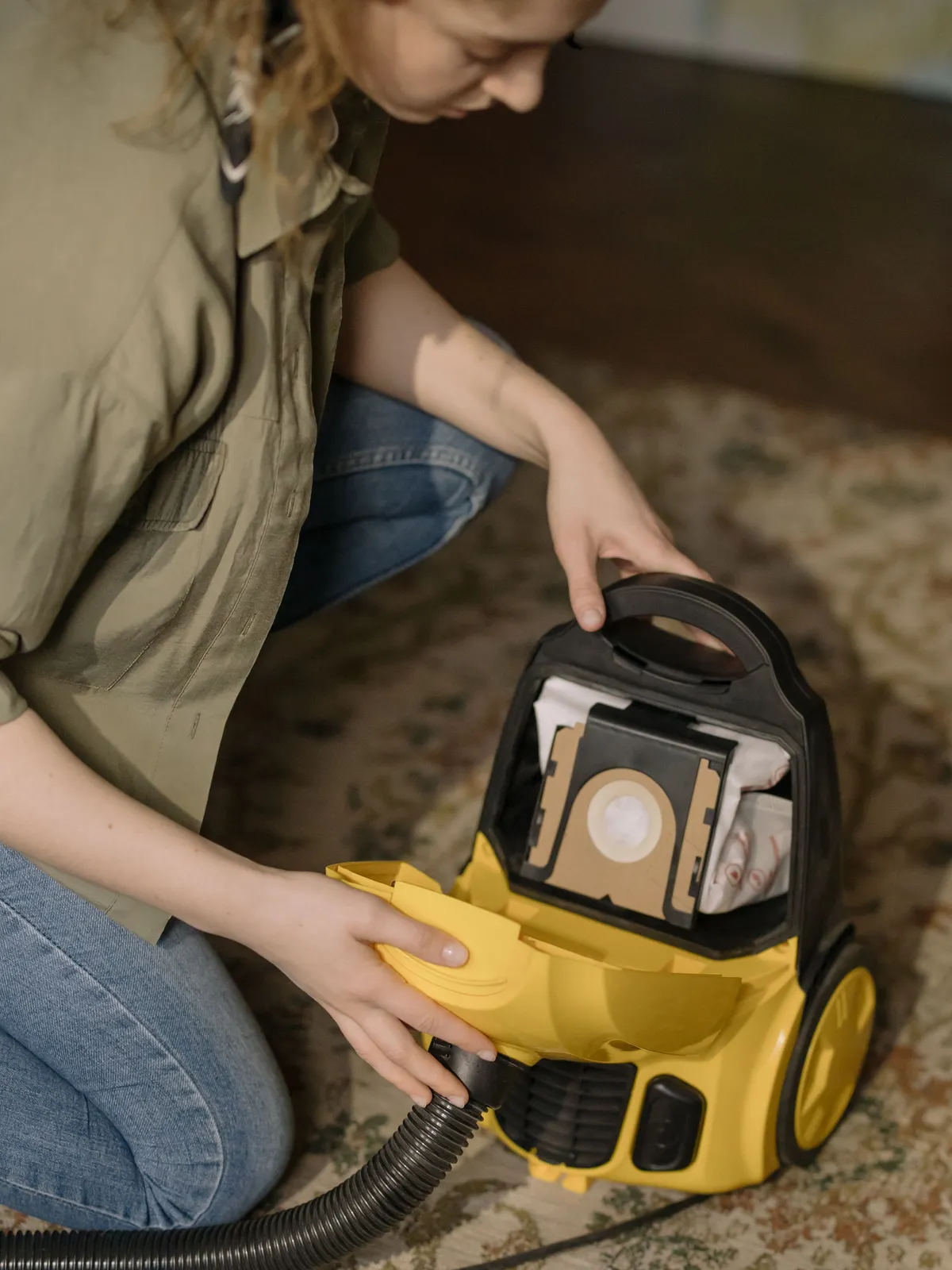
Vacuum cleaner bags aren't universal: the shape, connector and filtration grade differ by brand and often by model range, so the reliable way to buy the right one is to match your vacuum's model number (or the code printed on your old bag) against a bag-finder tool, rather than guessing. This guide explains how to tell whether your machine even takes a bag, how to identify the correct type, how paper bags compare with cloth (fleece) bags, when a cheaper universal bag is a reasonable substitute for a genuine one, and where UK buyers can source both.

Vacuum cleaner bags aren't a single standard size or shape — even models from the same brand can take different bags depending on the range, so the fastest way to buy the right one is to match it against your machine's model number rather than guessing from what came in the box. This guide covers how to tell whether your vacuum even uses a bag, how to identify the exact one it needs, how paper bags compare with cloth (fleece) bags, when a cheaper universal bag is a reasonable substitute, and where to buy vacuum dust bags in the UK.
Do you actually have a bagged vacuum cleaner?
Not every vacuum cleaner uses a disposable bag. Two broad designs exist:
- Bagged vacuums collect dust and debris inside a replaceable paper or cloth bag that sits inside the machine. When it's full, you throw the whole bag away rather than emptying loose dust.
- Bagless vacuums collect debris in a reusable plastic dust container (sometimes called a cyclone bin) that you empty directly into the household bin, then rinse or wipe out.
Most cordless stick vacuums, robot vacuums, and wet-and-dry floor washers on the market today are bagless by design — it's a natural fit for compact, cordless machines where a disposable bag would take up space and add weight. It's a pattern reflected in our own comparison catalogue too: every stick, robot and wet-dry model we currently track is a bagless dust-bin design, not a bagged one. Bags are still common, though, on traditional corded cylinder and upright vacuums from brands such as Miele, Numatic (Henry, Hetty, James), Sebo and some Bosch, Siemens and Panasonic ranges.
If you're not sure which type you have, check inside the machine where dust collects: a bag will be a sealed paper or fabric pouch clipped or slotted into a compartment; a bagless bin is a clear or opaque plastic canister you can lift out and see through.
How to work out exactly which vacuum bag you need
Once you know your vacuum is bagged, there are two reliable ways to identify the correct replacement:
- Check the code on your current bag. Genuine bags are usually printed with a manufacturer code (for example "GN" or "FJM" on Miele bags, or "NVM-1CH" on Numatic Henry/Hetty/James bags) on the cardboard collar. This code is the most direct match for a reorder.
- Find your vacuum's model number. This is normally printed on a rating plate or sticker on the underside of an upright, or on the back or base of a cylinder vacuum. Once you have the exact model number (not just the brand name), most vacuum parts retailers offer a bag-finder search where you enter the brand and model to see compatible bags.
If you don't have the old bag or can't locate the model number, the vacuum's original instruction manual (often downloadable from the manufacturer's support site) will list the compatible bag reference. Avoid buying by rough visual similarity alone — bags that look alike can have different connector collars or sealing mechanisms that won't fit properly, which can reduce suction or let dust leak back into the machine.
Vacuum bag types by brand: a quick reference
Bag naming conventions vary by manufacturer, and even within one brand, different vacuum ranges can take different bags. The examples below are commonly documented types, not an exhaustive list — always confirm against your specific model before buying.
| Brand / range | Common bag type or code | Notes |
|---|---|---|
| Miele full-size cylinder cleaners | GN (blue tab), roughly 4.5L capacity | Used across many Miele cylinder ranges, including current Complete C2/C3 models and several older S-series models |
| Miele compact cylinder cleaners | FJM (red tab), roughly 3.5L capacity | Fits Miele's smaller-bodied cylinder vacuums |
| Miele HyClean Pure range | CO (brown tab) or TU (turquoise tab) | Specific to particular Miele Guard-series models — check the exact model before ordering |
| Numatic Henry, Hetty, James, Henry Micro | NVM-1CH "Hepaflo" bags | Numatic's own disposable bag line for its well-known red/burgundy cylinder cleaners |
Because bag ranges are updated and renamed over time, treat this table as a starting point for recognising the kind of naming system you're dealing with, and verify the current code for your exact model using the methods in the section above.
Paper vs cloth (fleece) vacuum bags: what's the difference
Where a bag type is available in more than one material, you'll typically see a choice between standard paper bags and cloth (also called fleece, microfibre or synthetic) bags:
- Paper bags are the traditional, lower-cost option. They're widely available and inexpensive, but their pores can be coarser, so they may clog faster with very fine dust and tend to be single-use only.
- Cloth/fleece bags are made from a finer, multi-layer synthetic material. They're generally marketed as holding more dust before airflow drops and are often positioned as the better option for allergy sufferers, since finer fibres can capture smaller particles more consistently. They typically cost more per bag than paper equivalents.
- HEPA-rated bags or filter combinations add a certified high-efficiency filtration stage — true HEPA-rated products are tested to capture 99.97% of particles at 0.3 microns, which covers many common allergens such as dust mite debris and pollen. Be aware that some products are marketed as "HEPA-type" or "HEPA-style" rather than independently certified HEPA, and these can perform noticeably worse than genuine HEPA-rated bags or filters — check for an explicit HEPA certification rather than similar-sounding marketing terms.
Neither material is universally "better" — paper suits low-cost, infrequent use, while cloth/fleece and HEPA-rated bags suit households with pets, allergy sufferers, or anyone vacuuming very fine dust (plaster dust, sawdust) regularly. Whichever you choose, it needs to match the connector and size your specific vacuum accepts — material is a secondary choice, not a substitute for getting the right fit.
Universal (generic) vacuum bags vs genuine brand bags
Alongside brand-specific bags, many UK retailers sell "universal" or "generic" bags designed to fit a range of vacuum models via an adjustable or common-style collar. These are usually cheaper than genuine manufacturer bags and can be a reasonable option for many everyday cylinder and upright vacuums.
The trade-off to be aware of: a universal bag's collar may not seal against your machine's inlet as precisely as a genuine bag, which on some models can let unfiltered dust bypass the bag or reduce suction slightly. This matters most on vacuums with a sealed HEPA filtration system, where a poor bag seal can undermine the point of having HEPA filtration at all. For everyday cleaning on a machine without a sealed allergy-filtration system, a well-fitted universal bag is generally a practical, lower-cost choice; for allergy-sensitive households or sealed HEPA systems, a genuine bag matched to the exact model is the safer choice.
Where to buy vacuum bags in the UK
UK buyers can generally find both genuine and universal vacuum bags through:
- Vacuum and appliance parts specialists, such as Partmaster's vacuum bag finder or Yourspares' vacuum cleaner bags range, which let you search by brand and model to find compatible bags, both genuine and generic.
- The vacuum manufacturer's own website or authorised spares pages, which stock genuine bags and are the most reliable source if you want to be certain of an exact fit.
- General retailers and supermarkets, which often stock genuine or licensed generic bags for the most common brands (Henry, Miele, Vax, Hoover) but usually carry a narrower range than a dedicated parts specialist.
If you're unsure of your model number, guides such as Espares' how-to on finding your vacuum cleaner model number explain where to look on common vacuum designs.
How often should you change a vacuum bag?
There's no single fixed interval that suits every household, because it depends on how much you vacuum, how many people and pets are in the home, and how fine the dust is. As general guidance: light use in a small, low-traffic household might only need a bag change every couple of months, while a busy home with pets may need one every two to three weeks.
A few practical signs it's time to change the bag, regardless of a fixed schedule:
- Noticeably weaker suction, even after emptying/checking other blockages (hose, filter)
- The bag feels full or the "bag full" indicator (on models that have one) has triggered — don't ignore this even if the bag doesn't look completely full, since fine dust can clog the bag's pores and cut airflow well before it's full by volume
- A musty or dusty smell when the vacuum is running
- Visible dust escaping from the exhaust
Waiting until a bag is completely full is generally not advisable: airflow and cleaning performance tend to drop off before a bag reaches full capacity, particularly if it's been used to collect fine dust or pet hair.
Which vacuum bag do I need for my vacuum cleaner?
Check the code printed on the collar of your current bag — Miele uses codes like GN (roughly 4.5L, blue tab) or FJM (roughly 3.5L, red tab), while Numatic's Henry, Hetty and James range uses NVM-1CH 'Hepaflo' bags — or find your vacuum's model number on the rating plate, usually on the base of an upright or the back or base of a cylinder cleaner. Once you have the exact model number, most vacuum parts retailers, such as Partmaster or Yourspares, offer a bag-finder search where entering the brand and model shows compatible bags. Avoid buying by rough visual similarity alone, since bags that look alike can have different connector collars or sealing mechanisms that won't fit properly, reducing suction or letting dust leak back into the machine.
Are vacuum bags universal, or do they fit all brands?
No — bag shape, connector style and size vary by brand and often by model range within a brand, as shown by Miele alone using at least three different codes (GN, FJM, and CO or TU for its HyClean Pure range) across its own cylinder lineup. Some retailers sell 'universal' bags designed to fit a range of machines via an adjustable collar, and these can work well for everyday cleaning on a machine without a sealed allergy-filtration system. However, they're not guaranteed to seal as precisely as a genuine brand-specific bag, which matters most on vacuums with sealed HEPA filtration, where a poor seal can let unfiltered dust bypass the bag and undermine the point of having HEPA filtration at all.
What's the difference between paper and cloth vacuum bags?
Paper bags are the traditional, lower-cost option, widely available and inexpensive, but their coarser pores can clog faster with very fine dust and they're single-use only. Cloth, or fleece, bags are made from a finer, multi-layer synthetic material, generally marketed as holding more dust before airflow drops, and are often positioned as the better option for allergy sufferers since finer fibres capture smaller particles more consistently, though they typically cost more per bag. HEPA-rated bags add a certified high-efficiency filtration stage on top of either material, tested to capture 99.97% of particles at 0.3 microns, covering allergens like dust mite debris and pollen — though some products are marketed as 'HEPA-type' rather than independently certified HEPA, so check for explicit certification rather than similar-sounding marketing terms.
Does my vacuum cleaner even use a bag?
Check inside the dust compartment: a bagged vacuum has a sealed paper or fabric pouch clipped or slotted into a compartment that you remove and discard, while a bagless vacuum has a clear or opaque plastic bin, sometimes called a cyclone bin, that you empty directly into the household bin and rinse or wipe out. Most modern cordless stick vacuums, robot vacuums and wet-and-dry floor washers are bagless by design, since it's a natural fit for compact, cordless machines where a disposable bag would add weight and take up space. Bags remain common on traditional corded cylinder and upright vacuums, including many Miele, Numatic (Henry, Hetty, James), Sebo, and some Bosch, Siemens and Panasonic ranges, so check your specific machine rather than assuming by vacuum type alone.
How often should I replace my vacuum bag?
There's no single fixed schedule, since it depends on household size, pets and the type of dust being collected, but common guidance ranges from roughly every two months for light use in a small household to every two to three weeks in busy, pet-owning homes. Replace it sooner than any fixed schedule if suction weakens noticeably even after checking other blockages, a 'bag full' indicator triggers, you notice a musty or dusty smell when running the vacuum, or dust starts escaping from the exhaust. Don't wait until a bag looks completely full by volume, since fine dust can clog its pores and cut airflow well before that point, meaning cleaning performance drops off before the bag is visually full.
Where can I buy vacuum dust bags in the UK?
UK buyers can source both genuine and universal vacuum bags from dedicated vacuum and appliance parts specialists, such as Partmaster's vacuum bag finder or Yourspares' vacuum cleaner bags range, which let you search by brand and model to find compatible bags of either kind. The vacuum manufacturer's own website or authorised spares pages stock genuine bags and are the most reliable source if you want a guaranteed exact fit, matched to codes like Miele's GN or FJM or Numatic's NVM-1CH. General retailers and supermarkets often stock genuine or licensed generic bags for the most common brands, including Henry, Miele, Vax and Hoover, but usually carry a narrower range than a dedicated parts specialist, so a specialist is worth checking first for less common models.