Cordless Vacuum Replacement Battery: Genuine or Third-Party?
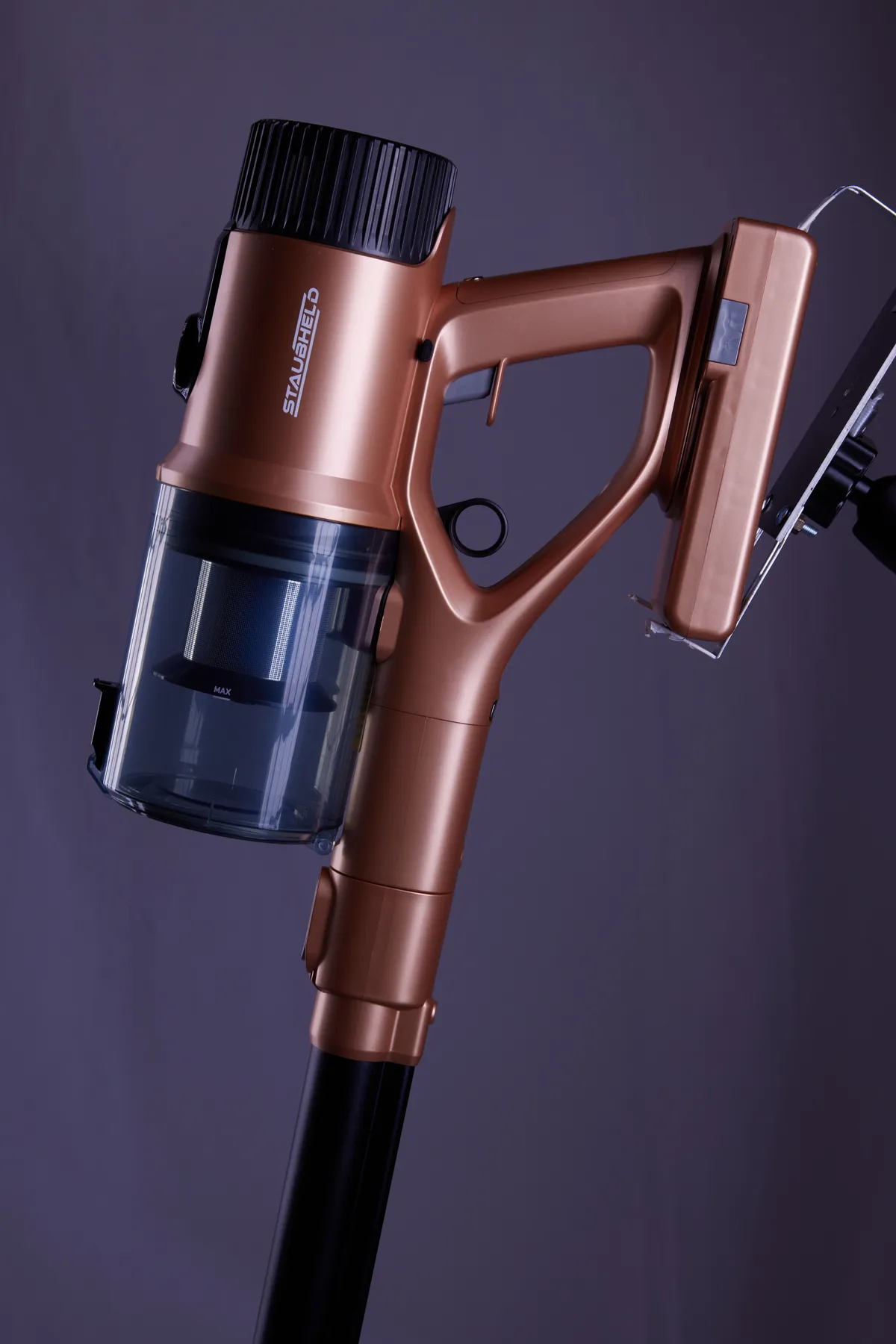
A cordless vacuum's replacement battery has to match its exact model number, not just its brand or family name, and buyers generally choose between a manufacturer-approved 'genuine' pack or a cheaper 'compatible' third-party one. Genuine batteries from Dyson, Vax and Shark's own stores have typically run from around £75 to £90 in the examples found for this guide, while third-party packs are usually listed from around £15 to £50, with quality and safety testing varying much more between third-party sellers than between manufacturers.
Data last updated:
A cordless vacuum's battery is tied to its exact model number, not just its brand or general product line, so the first job is identifying precisely what you have before you buy anything. Once you know that, the main decision is whether to buy a genuine battery approved by the manufacturer or a cheaper third-party 'compatible' pack - and that choice affects price, safety assurance and, in some cases, your vacuum's remaining warranty.
What replacement battery does your cordless vacuum need?
Two vacuums that look identical can use different battery packs if they're different generations or slightly different SKUs within the same range. Before buying a cordless vacuum replacement battery, gather three things:
- The exact model number, usually printed on a label on the underside of the machine, inside or near the battery compartment, or on the box and manual. This is often a short alphanumeric code (for example, a Vax model number like CLSV-HPKS or a Shark model number like IZ380UKT) rather than just the marketing name.
- The battery's voltage and capacity (Ah or mAh). These need to match your machine, or fall within the range your machine is designed to accept - a battery that merely looks similar isn't good enough.
- Whether you're looking at a genuine battery (made or approved by the manufacturer for your exact model) or a third-party/compatible battery (made by another company to fit the same connector).
Most manufacturers, including Dyson, Vax and Shark, publish a spares or 'find your battery' lookup tool on their own support site where you enter your model number and get the matching part. Starting there - even if you decide to buy elsewhere afterwards - is the most reliable way to avoid ordering the wrong pack.
Genuine vs third-party (compatible) batteries: what's actually different
'Genuine' replacement batteries are made or approved by the vacuum's manufacturer, matched to specific model numbers, and sold through the manufacturer's own website or authorised retailers. Third-party (sometimes called 'compatible' or 'aftermarket') batteries are made by other companies to fit the same connector and voltage, and are usually sold through general marketplaces at a lower price.
The practical differences that tend to matter:
- Fit and voltage. A genuine battery is designed for your exact model. A third-party listing's claim to be 'compatible with' a list of models is only as reliable as that seller's own testing, so it's worth checking reviews specific to your exact model rather than the general listing.
- Real vs stated capacity. Some cheap batteries are labelled with a higher mAh/Ah rating than they actually deliver. UK Trading Standards testing of budget batteries and chargers has previously found examples of significantly overstated capacity, alongside missing safety information (see the safety section below).
- Battery management and cell quality. Genuine packs from established brands are generally engineered and tested against that specific model's charging circuit and battery management system; the same level of testing isn't guaranteed for every third-party pack, and cell quality varies a great deal between sellers.
- Warranty. Fitting a non-genuine battery can affect the remaining warranty on your vacuum, or on any separate battery-specific warranty, depending on the manufacturer's terms - covered brand by brand below.
- Price. Genuine batteries typically cost noticeably more than a third-party equivalent for the same vacuum - often several times as much, based on the examples found for this guide.
Neither option is automatically right for everyone. If your vacuum is out of warranty, reasonably well-used, and you're prepared to vet a seller carefully, a third-party battery can be a cheap way to extend its life. If your vacuum is still under warranty, is a higher-value model, or you'd rather avoid uncertainty over fit and safety, a genuine battery is the more straightforward choice.
Dyson replacement batteries
Dyson's cordless stick range uses several different battery platforms rather than one universal pack, so a battery designed for one Dyson generation typically won't fit another. Among the specific Dyson models we hold data for, the V8 line runs on a 21.6V battery platform, while the V15 Detect Absolute uses a higher-voltage 25.2V pack rated around 3.6Ah. Dyson's own support site lets you look up the exact battery part number for your specific machine rather than guessing from the model name alone.
Genuine Dyson batteries are sold directly through the spares section of Dyson's own website; as one example, the battery for a Dyson V8 Absolute (part 974815-01) was listed at £89.90 there at the time of research. Third-party 'compatible' Dyson batteries are widely sold on Amazon, eBay and specialist battery retailers, generally for well under half that price. Worth knowing: UK and North American product-safety bodies have previously issued fire-risk warnings or recalls for specific third-party battery packs marketed as replacements for Dyson vacuums, including packs sold under other brand names for older Dyson V6-generation machines. That doesn't mean every third-party Dyson-compatible battery is unsafe, but it's a reason to stick to established, reviewed sellers rather than unbranded marketplace listings if you go this route.
Vax replacement batteries: the ONEPWR system
Vax's current cordless range - including its HomePro and Blade stick vacuum lines - shares a single battery platform called ONEPWR, running at 18V. Vax sells the packs in three capacities (2.0Ah, 4.0Ah and 8.0Ah), and the same battery generally fits any ONEPWR-badged Vax machine, not only the model it originally shipped with; this cross-compatibility is confirmed in Vax's own user guides, which list several compatible battery part numbers for a single vacuum model. Most Vax ONEPWR machines ship with a 4.0Ah battery as standard, and some higher-priced bundles include two batteries for extended runtime.
A genuine Vax ONEPWR 4.0Ah MAX battery (part BV25040) is sold both directly by Vax and through UK retailers including Amazon and Argos, with prices seen ranging from roughly £30 up to around £80 depending on retailer and promotions at the time of research. Vax's standard guarantee on its cordless machines is typically five years on the machine and three years specifically on the battery, but only when the product has been registered with Vax - an unregistered machine, or one fitted with a non-Vax battery, may not get that extended battery cover.
Shark replacement batteries
Shark's cordless stick vacuums don't share one universal battery across the whole range in the way Vax's ONEPWR system does; voltage and capacity vary by model. For example, the Shark PowerPro Pet IZ380UKT in our data uses a 21.6V, 3.5Ah pack, while some other Shark stick models in the range use a 25.2V platform instead. Shark sells genuine replacement and spare battery packs directly through its own UK parts and support pages; a genuine additional battery pack (model XSBT600EU) was listed at £79.99 on Shark's official UK site at the time of research. Shark's own guidance states that fitting non-Shark parts, including batteries, can invalidate your guarantee, so it's worth checking your specific model's warranty terms before buying a third-party alternative.
On the Shark models we hold warranty data for, the typical structure is a five-year guarantee on the machine once registered, alongside a shorter two-year guarantee specifically on the battery - though this varies by product line, so check the terms for your exact model rather than assuming they all match.
Other brands: shared battery platforms are common
Several manufacturers design one battery platform across a whole model family rather than a unique pack per individual SKU, which is useful to know if you're hunting for a genuine part for an older or less common model. AEG, for example, sells several colour and accessory variants of its 7000 Series, 8000 Series and QX-series stick vacuums that draw on the same core battery platform within that family - a shared 14.4V pack across the 7000 Series range, or an 18V pack shared across several QX-series models - even though the outer casing or included accessories differ between variants. If you can't find a battery listed under your exact model name, checking whether your machine belongs to a wider model family, and searching for that family's shared battery platform instead, can turn up a genuine part that fits.
Cordless vacuum battery prices in the UK
Genuine batteries bought directly from Dyson, Vax and Shark's own stores generally ran from around £75 to £90 in the specific examples found for this guide, though exact pricing depends on the model, capacity and any promotions running at the time. Third-party 'compatible' batteries are usually cheaper - commonly listed from around £15 up to roughly £40-£50 on marketplaces such as Amazon and eBay - which is the main reason they're popular, but that price gap also reflects a wide range of build quality, and not every listing clearly states which exact models it has genuinely been tested against.
| Type | Typical UK price range (examples seen) | What you're generally paying for |
|---|---|---|
| Genuine, brand-specific pack | Roughly £75-£90 | Manufacturer testing and quality control; usually keeps any remaining product or battery warranty valid |
| Third-party 'compatible' pack | Roughly £15-£50 | Lower upfront cost; quality, real-world capacity and safety testing vary significantly between sellers |
These figures come from a snapshot of specific listings found during research for this guide rather than live pricing - always check current prices for your exact model before buying, since retailer promotions and stock levels shift regularly.
Is a third-party battery safe? What to check before buying
Cheaper isn't automatically unsafe, but the price gap between genuine and third-party batteries partly reflects the fact that not every third-party seller tests packs to the same standard. UK consumer body Electrical Safety First advises against using second-hand batteries and chargers with appliances such as cordless vacuums, and recommends buying replacement parts from the same manufacturer, or from a reputable supplier who can confirm genuine compatibility, rather than from unverified marketplace or private sellers. UK Trading Standards testing of cheap replacement batteries and chargers has previously found examples with mislabelled capacity, missing safety information, and a heightened risk of fire, electric shock or explosion, and there have been specific fire-hazard recalls of third-party battery packs marketed as replacements for at least one major cordless vacuum brand.
If you decide to buy a third-party battery anyway, a few checks reduce - though don't eliminate - the risk:
- Buy from an established UK retailer or a marketplace seller with a verifiable trading history and reviews specific to that exact product, not just the seller in general.
- Check that the voltage matches your machine exactly, and that the listed capacity (mAh/Ah) looks realistic for the price - genuinely higher-capacity cells cost more to make, so an unusually low price on a high-capacity claim is a warning sign.
- Look for CE or UKCA marking on the listing or packaging, and be cautious of batteries with no visible safety certification information at all.
- Don't leave a new battery charging unattended the first few times you use it, and stop using it immediately if it swells, becomes unusually hot, or the vacuum's runtime is far shorter than advertised.
- Check your vacuum's warranty terms first - some manufacturers explicitly state that non-genuine parts can void remaining cover on the machine or the battery specifically.
Fitting a replacement battery
On most modern cordless stick vacuums, the battery is designed to be removed without tools: there's usually a release button or catch near where the battery sits (often behind the handle or at the base of the machine), and the pack slides or clips out once released. Manufacturer support sites - Dyson, Vax and Shark all publish these - typically include a short guide or video for your specific model, which is worth following rather than guessing, since removal steps differ slightly between models. If your vacuum's battery is sealed inside the casing rather than user-removable, replacing it yourself may not be practical, and a repair service is usually the better route.
When replacing the battery isn't worth it
A replacement battery makes sense when the rest of the vacuum - motor, suction, filters, floorhead - is still working well and the main problem is reduced runtime or a battery that won't hold charge. It's a less clear-cut decision if your machine is an older or discontinued model where a genuine battery is hard to find or expensive relative to what the vacuum originally cost, or if other parts (motor noise, suction, filter condition) are also showing their age. In those cases, comparing the cost of a genuine replacement battery against the price of a similarly specified new cordless vacuum is worth doing before committing to the repair.
How do I find out which battery my cordless vacuum needs?
Check the exact model number on your vacuum — usually on a label near the battery compartment, on the base of the machine, or in the manual — then use your manufacturer's official parts or spares lookup tool, since Dyson, Vax and Shark all publish a 'find your battery' tool that matches a model number to the correct part. Battery voltage and capacity can vary between models within the same product family, and two vacuums that look identical can even use different packs if they're different generations or SKUs, so matching by exact model number is far more reliable than matching by product name or general appearance alone.
Is a third-party vacuum battery safe to use?
It depends heavily on the specific seller and product. UK consumer safety bodies have flagged real fire and shock risks with some cheap or unverified third-party batteries and chargers, including specific recalls affecting batteries marketed as replacements for at least one major cordless vacuum brand, alongside Trading Standards findings of mislabelled capacity and missing safety information. Buying from an established retailer with reviews specific to your exact product, checking for CE or UKCA marking, and confirming the voltage and capacity genuinely match your machine can reduce risk, but genuine or manufacturer-approved batteries — typically £75-£90 versus £15-£50 for third-party packs — generally carry more assurance around testing and warranty.
How much does a Dyson replacement battery cost in the UK?
A genuine Dyson battery bought directly from Dyson's own site was seen priced at around £90 (part 974815-01) for the V8 Absolute at the time of research, though the exact price depends on which Dyson generation and model you have — the V15 Detect Absolute, for example, uses a different, higher-voltage 25.2V battery platform rather than the V8's 21.6V pack. Third-party compatible Dyson batteries are typically listed for well under half that on marketplaces like Amazon and eBay, with much wider variation in quality, and UK and North American safety bodies have previously issued fire-risk warnings over some third-party packs sold as Dyson-compatible, so sticking to established, reviewed sellers matters more than with a genuine battery.
Does a Vax ONEPWR battery work in any Vax vacuum?
Vax's ONEPWR battery platform (18V, available in 2.0Ah, 4.0Ah and 8.0Ah capacities) is shared across its ONEPWR-badged cordless range, including the HomePro and Blade stick lines, so a genuine ONEPWR battery is generally compatible with more than one Vax model rather than tied to a single SKU. Most Vax ONEPWR machines ship with a 4.0Ah battery as standard. A genuine ONEPWR 4.0Ah MAX battery (part BV25040) has been seen priced from roughly £30 up to around £80 depending on retailer and promotions. Check your specific model's compatible battery list in Vax's official user guide to confirm before buying, since cross-compatibility, while common, isn't automatically guaranteed for every ONEPWR-badged machine.
Will fitting a non-genuine battery void my vacuum's warranty?
It can. Shark's own guidance states that using non-genuine parts, including batteries, may invalidate your guarantee, and battery-specific warranty extensions — such as Vax's three-year battery cover on top of its standard five-year machine guarantee — are typically tied to registering the genuine product. Shark's typical structure is a five-year guarantee on the machine once registered alongside a shorter two-year guarantee specifically on the battery, though this varies by product line. Check your specific model's warranty terms before fitting a third-party battery if the machine is still under warranty, since the potential saving of £15-£50 on a compatible pack could cost more than a genuine £75-£90 battery if it forfeits wider cover.
Can I replace a cordless vacuum battery myself?
On most modern cordless stick vacuums, yes — the battery is designed to be user-removable via a release button or catch, usually near the handle or base of the machine, and manufacturers including Dyson, Vax and Shark publish model-specific fitting guides or videos. Some models have a sealed, non-removable battery instead, in which case a professional repair service is usually needed rather than attempting a DIY replacement. Whichever route you take, it's worth confirming the exact model number and matching voltage and capacity first, since fitting the wrong pack can be a safety risk as well as simply not working, and checking your warranty terms beforehand if the machine is still covered.
How much does a cordless vacuum replacement battery cost in the UK overall?
Based on the examples found for this guide, genuine batteries from manufacturers' own stores — including Dyson, Vax and Shark — generally cost around £75-£90, while third-party compatible batteries are typically listed from around £15 up to roughly £40-£50. Exact prices vary by model, capacity and current retailer promotions, and the size of that price gap partly reflects genuine testing and warranty assurance rather than just brand markup, since UK Trading Standards testing has previously found quality and labelling issues among cheaper third-party packs. If your vacuum is out of warranty and reasonably well-used, a vetted third-party battery can be a reasonable way to extend its life at lower cost.